




Investing in Section 8 housing offers real estate investors a stable, government-backed income stream, providing an opportunity to build a reliable cash flow. By focusing on regions with high demand for affordable housing, investors can generate a consistent return on investment (ROI) while supporting communities in need of safe and affordable living options.
However, to truly maximize the potential of Section 8 investments, it is crucial to choose the right states where rental yields are high, property values are stable, and there is a consistent demand for affordable housing. States like Texas, Florida, and Tennessee are among the top contenders, each offering unique advantages for Section 8 landlords, but they also come with their own sets of challenges. Understanding these factors is key to making informed decisions and ensuring the long-term success of your investment strategy.
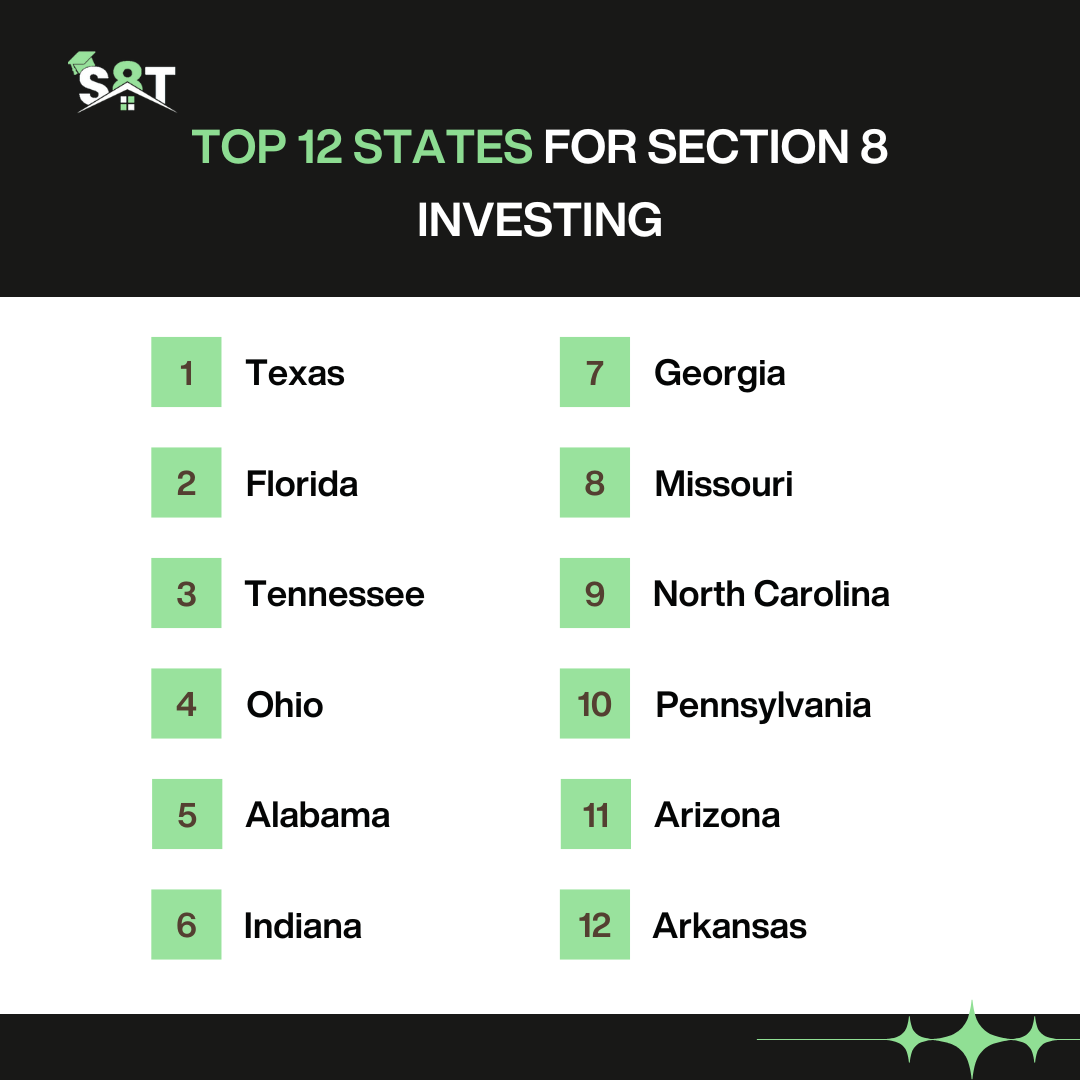
Top 12 states for Section 8 investing are as follows:
1. Texas
Texas is a strong contender for Section 8 investing, especially in cities like Houston, Dallas, and San Antonio, where the demand for affordable housing is consistently high. With a median rent of $1,875 and an average home value of $296,039, investors can expect a rental yield of 7.6% and a favorable price-to-rent ratio of 13.157. The state's low vacancy rate (8.52) ensures steady rental income, though operating expenses such as property taxes (1.58%), maintenance, and insurance ($3,899) should be considered.
However, risks exist, particularly in coastal cities like Houston, which are prone to hurricane damage, leading to repair costs and potential property value depreciation. Additionally, rapidly expanding cities such as Austin and Dallas may experience market fluctuations as the population grows and the demand for housing changes. Despite these challenges, the diverse economy of Texas, driven by energy, technology, and healthcare industries, supports long-term stability in rental demand, making it one of the top states for Section 8 investment.
2. Florida
Florida is another top state for Section 8 investing, with high demand for affordable housing in cities like Miami, Orlando, and Tampa. The state offers a median rent of $2,332 and an average home value of $372,356, providing a strong rental yield of 7.5% and a price-to-rent ratio of 13.3. While annual operating expenses, such as property taxes (0.79%), maintenance, and insurance, can be higher in Florida, especially in coastal areas, the overall return on investment remains attractive due to the state's strong rental market and steady demand for affordable housing.
Section 9 investors should, however, consider risks specific to Florida, including hurricane season, which can result in property damage and higher insurance costs ($5,838). Additionally, rapidly appreciating property values in certain cities may lead to potential market fluctuations. Despite these challenges, Florida’s growing economy, supported by tourism, real estate development, and healthcare industries, ensures strong long-term rental demand, making it a prime state for Section 8 investments.
3. Tennessee
Tennessee is a growing hub for Section 8 investing, particularly in cities like Nashville, Memphis, and Knoxville, where there is a consistent and increasing demand for affordable housing. The state offers a median rent of $1,695 and an average home value of $326,998, delivering a rental yield of 6% and a price-to-rent ratio of 16.07. While annual operating expenses, such as property taxes (0.55%), maintenance, and insurance ($2,672), remain reasonable, the state’s low vacancy rate (7.57%) further strengthens its appeal, ensuring consistent rental income for Section 8 investors.
That said, Section 8 investors should be mindful of certain risks, including economic fluctuations in smaller cities and property value volatility in fast-growing areas. However, Tennessee’s diverse economy, driven by industries like healthcare, entertainment, and manufacturing, continues to foster long-term demand for affordable rental housing, making it an attractive option for Section 8 investment.
4. Ohio
Ohio is a top state for Section 8 investing, especially in cities like Cleveland, Columbus, and Cincinnati, where the demand for affordable housing remains strong. The state boasts a median rent of $1,319 and an average home value of $236,963, resulting in a rental yield of 6.6% and a price-to-rent ratio of 14.9. Ohio’s relatively low annual operating expenses, including property taxes (1.36%) and maintenance costs, make it an affordable market for Section 8 investors, while its low vacancy rate (5.86%) helps ensure steady demand for rental properties.
Despite the strong returns, Section 8 investors should be aware of potential risks, including economic shifts in certain cities and the need for ongoing investment in older housing stock. However, Ohio’s stable economy, supported by industries such as manufacturing, healthcare, and education, continues to drive long-term demand for affordable rental housing, making it a solid choice for Section 8 investing.
5. Alabama
Alabama offers a promising market for Section 8 investing, especially in cities like Birmingham, Montgomery, and Huntsville, where affordable housing demand remains strong. The state has a median rent of $1,406 and an average home value of $231,050, which translates to a rental yield of 7% and a price-to-rent ratio of 13.7. Alabama’s annual operating expenses, including property taxes (0.38%), maintenance, and insurance ($3,114), are relatively low, making it an attractive option for Section 8 investors looking for strong returns with lower upfront costs. The state's low vacancy rate (9.56%) further strengthens its appeal, ensuring consistent rental income.
However, Section 8 investors should consider risks such as economic dependence on certain industries and potential property value depreciation in more rural areas. Despite these risks, Alabama’s diverse economy, bolstered by automotive, aerospace, and technology sectors, supports long-term rental demand, making it a solid choice for Section 8 investment.
6. Indiana
Indiana is an attractive state for Section 8 investing, particularly in cities like Indianapolis, Fort Wayne, and Evansville, where demand for affordable housing is strong. The state offers a median rent of $1,400 and an average home value of $248,414, providing a rental yield of 6-7% and a price-to-rent ratio of 14.78. Indiana’s annual operating expenses, including property taxes (0.78%) and maintenance costs, are relatively low, making it an affordable market for Section 8 investors. Additionally, the state benefits from a steady vacancy rate (5.61%), ensuring a consistent demand for rental properties and reliable rental income.
While the market is promising, Section 8 investors should consider potential risks such as economic shifts in smaller cities and the possibility of property value fluctuations in certain regions. However, Indiana’s stable economy, driven by manufacturing, healthcare, and education sectors, ensures long-term demand for affordable rental housing, making it a strong choice for Section 8 investing.
7. Georgia
Georgia offers a robust market for Section 8 investing, particularly in cities like Atlanta, Savannah, and Augusta, where the demand for affordable housing remains high. The state has a median rent of $1,900 and an average home value of $328,216, yielding a rental yield of 7% and a price-to-rent ratio of 14.4. With relatively low annual operating expenses, including property taxes (0.81%), maintenance, and insurance ($2,041), Georgia provides an affordable market for Section 8 investors, while the state’s low vacancy rate (7.76%) ensures consistent rental income and reliable tenant demand.
Despite the strong prospects, Section 8 investors should be aware of risks such as rising property taxes in major urban centers like Atlanta (1.44% of the assessed property) and potential fluctuations in housing demand during economic downturns. However, Georgia’s growing economy, driven by sectors like film and entertainment, technology, and transportation, supports long-term rental demand, making it a favorable state for Section 8 investing.
8. Missouri
Missouri offers a stable market for Section 8 investing, with cities like St. Louis, Kansas City, and Columbia showing strong demand for affordable housing. The state has a median rent of $1,350 and an average home value of $255,937, delivering a rental yield of 6% and a price-to-rent ratio of 15.8. With relatively low annual operating expenses, including property taxes (0.88%) and maintenance, Missouri provides an affordable market for Section 8 investors. Additionally, its low vacancy rate (6.91%) ensures a steady stream of rental income.
Despite the favorable conditions, Section 8 investors should be mindful of risks such as economic fluctuations in certain areas and potential property value declines in underserved regions. However, Missouri’s diverse economy, driven by sectors like agriculture, healthcare, and manufacturing, continues to support stable long-term demand for affordable housing, making it a solid option for Section 8 investing.
9. North Carolina
North Carolina is an increasingly popular state for Section 8 investing, particularly in cities like Charlotte, Raleigh, and Durham, where there is strong demand for affordable housing. The state has a median rent of $1,795 and an average home value of $329,817, offering a rental yield of 6-6.5% and a price-to-rent ratio of 15.3. With reasonable annual operating expenses, including property taxes (0.70%) and maintenance, North Carolina provides a solid return on investment, while its relatively low vacancy rate (8.18%) ensures steady demand for rental properties.
Section 8 investors should consider potential risks, such as property tax fluctuations and market volatility in rapidly growing urban areas like Charlotte (sales tax rate of 7.25%). However, North Carolina’s diverse economy, driven by finance, technology, and education, supports long-term demand for affordable housing, making it a strong choice for Section 8 investment.
10. Pennsylvania
Pennsylvania offers a stable market for Section 8 investing, with cities like Philadelphia, Pittsburgh, and Allentown showing steady demand for affordable housing. The state has a median rent of $1,550 and an average home value of $277,535, yielding a rental yield of 6.5-7% and a price-to-rent ratio of 14.9. Pennsylvania’s relatively low annual operating expenses, including maintenance and insurance costs ($1,278), make it an attractive option for Section 8 investors, while its low vacancy rate (5.6%) ensures consistent rental income.
However, Section 8 investors should be aware of risks such as property taxes (1.35%) in larger cities and potential economic downturns in certain regions. Despite these risks, Pennsylvania’s diverse economy, driven by industries such as manufacturing, education, and healthcare, continues to support stable demand for affordable housing, making it a solid choice for Section 8 investment.
11. Arizona
Arizona offers strong investment opportunities for Section 8 landlords, particularly in cities like Phoenix, Tucson, and Mesa, where there is significant demand for affordable housing. The state has a median rent of $1,965 and an average home value of $417,884, delivering a rental yield of 5.5-6% and a price-to-rent ratio of 17.7. Despite higher home values, Arizona remains an attractive market for Section 8 investors due to its relatively low annual operating expenses, including property taxes (0.52%), maintenance, and insurance ($2,331), as well as its steady vacancy rate (7.74%), ensuring consistent rental income.
Section 8 investors should consider risks like potential property tax increases and market fluctuations in rapidly growing areas such as Phoenix. However, Arizona’s strong economy, driven by sectors like real estate, technology, and tourism, supports long-term rental demand, making it a favorable state for Section 8 investing.
12. Arkansas
Arkansas presents an appealing market for Section 8 investing, particularly in cities such as Little Rock, Fort Smith, and Fayetteville, where affordable housing demand is steadily growing. The state has a median rent of $1,400 and an average home value of $218,133, offering a rental yield of 7-8% and a price-to-rent ratio of 12.98. Arkansas stands out for its low annual operating expenses, including property taxes (0.57%), maintenance, and insurance ($3,287), which make it an attractive option for Section 8 investors. The state also benefits from a relatively low vacancy rate (5.84%), ensuring consistent demand for rental properties.
Investors should consider risks such as local economic shifts and fluctuations in property demand, particularly in smaller urban areas. However, Arkansas’s growing economy, supported by sectors like agriculture, manufacturing, and education, provides long-term stability in rental demand, making it a strong state for Section 8 investment.
What are the Factors that Make States Section 8–Investing Friendly?
States are Section 8 investment-friendly when they have efficient public housing authorities, a strong rental market, financial stability, and landlord-friendly laws, all of which enhance returns and minimize risks for investors. These factors create a stable environment, ensuring reliable income streams and long-term investment success.
5 factors that make states Section 8-investing friendly are:
- Efficient Local Public Housing Authorities (PHAs)
Well-managed PHAs ensure that the Section 8 process is smooth and efficient, from tenant eligibility to timely rent payments. Investors benefit from reduced administrative burdens and a reliable payment schedule, which is crucial for steady cash flow and minimizing vacancy risk.
- Strong Rental Market & Demand
A robust rental market with high demand for affordable housing ensures that Section 8 landlords can maintain consistent occupancy. In areas with high rental demand, properties are more likely to stay occupied, reducing the risk of prolonged vacancies that can significantly impact rental income.
- Financial Stability & Incentives
States that offer economic stability and financial incentives, such as tax breaks or low property taxes, create a favorable environment for Section 8 investment. These factors not only reduce the cost of doing business but also attract more investors, further supporting rental demand and market stability.
- Landlord-Friendly Laws
Investor-friendly laws are vital for Section 8 landlords, providing greater control over properties. Such laws ensure that landlords can efficiently manage evictions, enforce lease agreements, and navigate tenant disputes, ultimately reducing legal expenses and protecting the investment.
- Reduced Capital Expenditure
States with affordable housing stock and lower maintenance costs enable investors to achieve higher returns. By investing in properties with lower initial costs and reduced ongoing maintenance, Section 8 landlords can maximize their rental yields and keep their expenses manageable.
How to Choose the Right State for Your Section 8 Investment?
To choose the right state for Section 8 investment, consider factors such as demand for affordable housing, price-to-rent ratio, stable job growth, low vacancy rates, and good cash flow. States with high rental demand, a stable economy, and strong job growth provide consistent occupancy and attractive rental yields, ensuring steady income for investors.
Additionally, evaluate landlord-friendly laws and property market trends. States with favorable laws make managing properties easier, while regions with appreciating property values provide long-term growth potential. To make well-informed decisions, Section 8 investors should also enroll in a Section 8 training course that offers in-depth guidance on evaluating local markets, understanding regulations, and selecting the best areas for Section 8 investments.

.svg)


